You've got your permits, your product is ready, and you just landed a spot at a local farmers market. Now what?
Your booth is your storefront. It's the first thing customers see — and in a busy market with dozens of vendors, you have about three seconds to catch someone's attention. A great booth setup doesn't just look nice. It builds trust, invites people in, and makes buying easy.
Here's how to set up a farmers market booth that actually sells.
1. Start With Your Table Layout
Most markets give you a 10x10 foot space with one or two tables. That's not a lot of room, so every inch matters.
Here's a layout that works well for most food vendors:
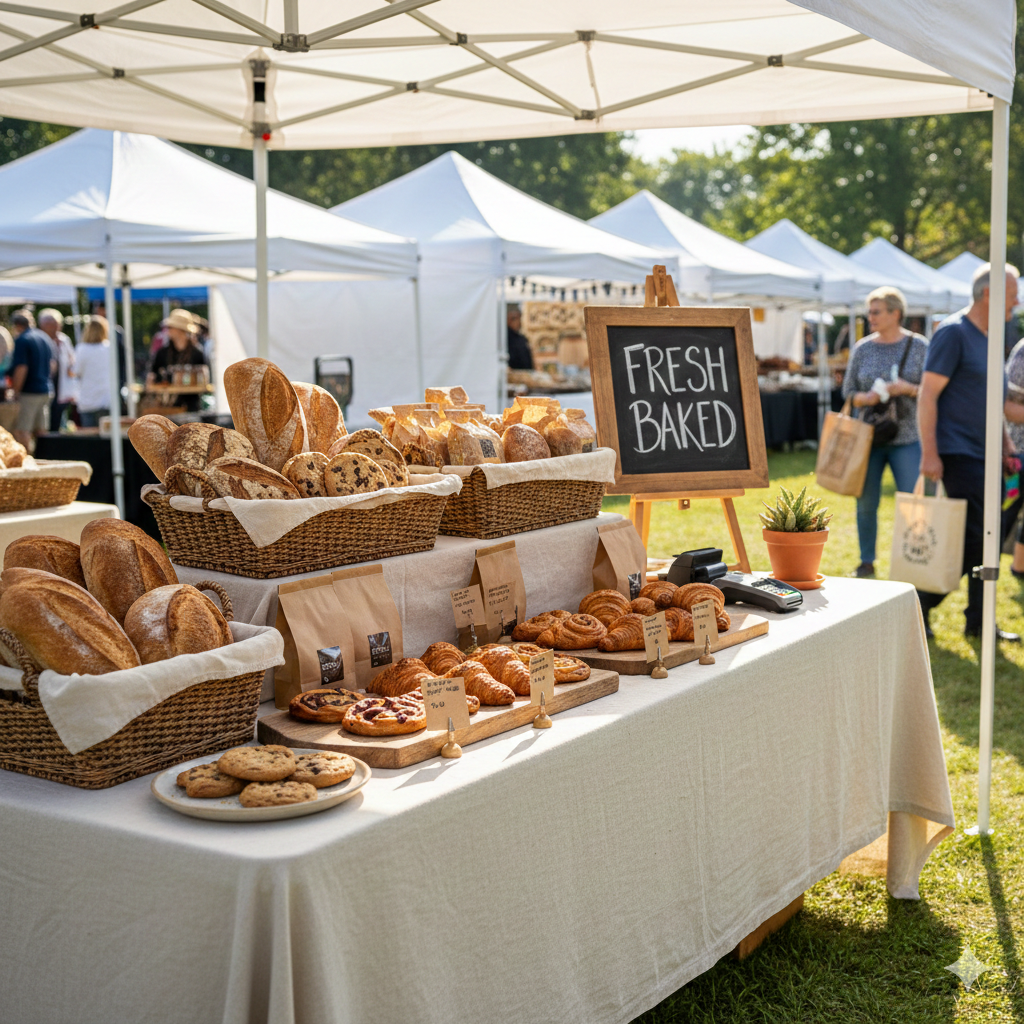
- Front of the table — your products, arranged at different heights so everything is visible from a distance.
- Middle — samples (if you're offering them) and your price list or menu board.
- Behind you — backup stock, bags, payment equipment, and personal items out of sight.
Pro Tip: Use risers, crates, or small shelves to create height. A flat table where everything sits at the same level looks cluttered and forgettable. Layers draw the eye and make your booth look fuller and more professional.
2. Signage That Works From 10 Feet Away
Your signage needs to do one job: tell people who you are and what you sell — fast.
You need three types of signs:
- Banner or header sign — your business name and logo, visible from across the market. This goes at the top of your booth or on the front of your table.
- Product signs — what each item is and how much it costs. Keep these short and readable. No one wants to squint at a paragraph.
- Story sign (optional but powerful) — a small sign that says something like "Handcrafted in Port Coquitlam" or "Made with locally sourced ingredients." People love knowing the story behind their food.
Use large, bold fonts. Skip the fancy cursive — if people can't read it from a few feet away, it's not doing its job.
3. Make Your Pricing Clear and Simple
One of the biggest mistakes new vendors make is hiding their prices — or worse, not displaying them at all.
When customers can't see a price, most won't ask. They'll just walk past.
Here's what works:
- Price every item individually with a small sign or tag.
- If you offer bundles (e.g., "3 for $20"), make that visible and prominent.
- Use round numbers when possible — $10 is easier to process than $9.75.
- Consider a simple menu board listing all your products and prices in one place.
Pro Tip: Bundle pricing is one of the easiest ways to increase your average sale. Instead of selling one jar for $8, offer three for $20. Customers feel like they're getting a deal, and you sell more per transaction.
4. Samples Sell (If You Do Them Right)
If your product is something people need to taste before they buy — sauces, baked goods, spreads, snacks — samples are one of your most powerful tools.
But there's a right way to do it:
- Keep samples small. A tiny taste is enough. You're sparking curiosity, not giving away lunch.
- Be ready to talk. When someone tries your product, that's your moment. Tell them what it is, what makes it special, and how much it costs.
- Use the sample to lead to a sale. "That's our best-selling hot honey — it's $12 for the full jar" is a natural, easy close.
- Follow your local health authority's sampling rules. In BC, you'll need to follow specific guidelines for public sampling. Check with your local market organizer.
5. Accept Multiple Payment Methods
Cash is still common at markets, but more and more customers expect to pay by card or tap. If you only accept cash, you're leaving sales on the table.
Set up a simple payment system before your first market day:
- Square, Stripe, or a similar card reader — easy to set up, low transaction fees, and works from your phone.
- Cash float — bring plenty of change. Start with at least $50–$80 in small bills and coins.
- E-transfer — some vendors also accept Interac e-Transfer as a backup.
Put a small sign at your booth showing which payment methods you accept. It removes friction and makes people more comfortable buying.
6. Your Booth Checklist
Here's everything you should bring on market day. Print this out and keep it in your kit:
- Table and tablecloth — a clean, solid-color cloth instantly elevates your look.
- Canopy/tent — most markets require one. Make sure it's weighted down.
- Signage — banner, product signs, price tags.
- Product display — risers, crates, baskets, or stands for height.
- Samples setup — cups, napkins, toothpicks, serving tray, gloves.
- Payment — card reader, charged phone, cash float, receipt paper.
- Packaging — bags, boxes, tissue paper, stickers for branding.
- Business cards or flyers — so people can find you online or place orders later.
- Permits and licenses — keep copies on hand. Some markets and inspectors ask to see them.
- Personal supplies — water, snacks, sunscreen, layers, a chair for slow moments.
7. First Market? Here Are Some Extra Tips
If this is your first time selling at a market, here's some honest advice from vendors who've been there:
- Arrive early. Give yourself at least an hour before the market opens to set up and settle in.
- Talk to your neighbors. The vendor community is incredibly supportive. Introduce yourself — they'll share tips, lend you supplies, and send customers your way.
- Don't be discouraged by a slow first day. It takes time for people to discover you. Consistency matters more than one big day.
- Take photos of your booth. You'll want them for social media, and you'll use them to improve your setup each week.
- Bring more product than you think you need. Running out early feels worse than bringing some home.
"My first market I sold $80 worth of product and almost quit. By my fourth market I was doing $400+. You just have to keep showing up."
Your Booth Is Your Brand
At a farmers market, your booth tells the story of your business before you say a single word. A clean setup, clear pricing, and a friendly face go a long way.
You don't need a huge budget or a fancy display. You just need to be organized, intentional, and ready to connect with your customers.
And if you're still in the early stages — figuring out permits, getting your production dialed in, or trying to find the right kitchen — we can help with that too.
Book a free kitchen tour and let's talk about getting your business market-ready.